Most garbage disposals last between 8 and 15 years, depending on how they’re used and maintained. Some units wear out closer to the lower end of that range, while others continue working reliably for well over a decade with proper care.
Lifespan varies because garbage disposals handle daily food waste, and not all usage habits are the same. The types of food being processed, how often the unit runs, and whether it’s maintained regularly all influence how quickly internal components wear down. Understanding these factors helps homeowners keep their disposal working longer and recognize when it may be time for a repair or replacement.
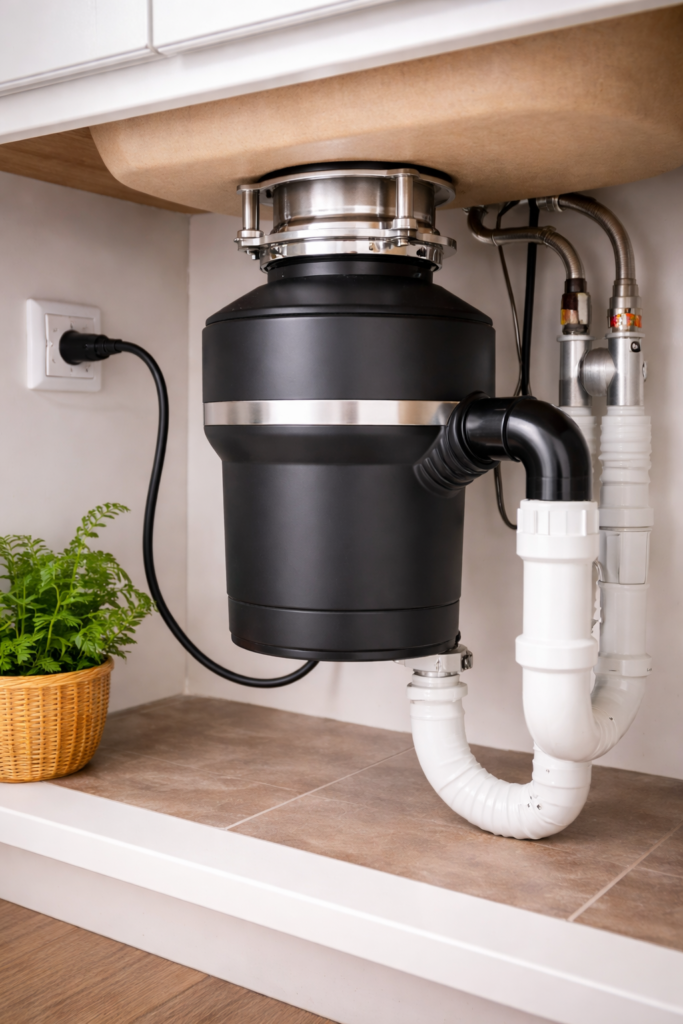
Average Garbage Disposal Lifespan
A typical residential garbage disposal lasts 8 to 15 years. This range reflects normal household use with basic maintenance.
Units that are used lightly and operated correctly often last longer. On the other hand, disposals that handle heavy loads, improper food waste, or frequent misuse may wear out sooner. Build quality and motor strength also play a role. Disposals with more durable components may hold up better under regular use, while lighter-duty units may experience earlier wear.
Daily habits tend to have a greater impact than the unit itself. Even a well-built disposal can fail early if it is consistently overloaded or exposed to materials it is not designed to handle.
Factors That Affect Garbage Disposal Lifespan
Several common factors influence how long a garbage disposal lasts:
- Types of food waste: Hard items like bones, fibrous foods like celery, and grease can damage blades or clog internal components
- Frequency of use: Disposals used multiple times per day experience more wear on motors and grinding elements
- Proper operation: Running water during use and avoiding overloading helps reduce strain
- Maintenance habits: Regular cleaning prevents buildup and odors that can affect performance
- Installation quality: Improper installation can lead to leaks, vibration, or early mechanical issues
Food choices have a significant impact. Grease can coat internal parts and pipes, while fibrous foods can wrap around grinding components. Over time, these issues can lead to jams, reduced efficiency, and premature failure.
Warning Signs a Garbage Disposal Is Failing
Garbage disposals often show warning signs before they stop working completely. Paying attention to these signals can help homeowners address problems early.
Common warning signs include:
- Frequent clogs or jams during normal use
- Unusual grinding or humming noises that were not present before
- Persistent odors that do not go away with cleaning
- Slow draining in the sink connected to the disposal
- Leaks under the sink near the disposal unit
- Unit not turning on consistently or needing frequent resets
A humming noise without grinding usually indicates a jammed unit. If the motor runs but nothing happens, internal components may be stuck or worn. Persistent odors can signal trapped food debris or buildup that routine cleaning is no longer resolving.
If these issues occur regularly, the disposal may be nearing the end of its lifespan.
Maintenance Tips to Extend Garbage Disposal Life
Routine care can significantly extend the life of a garbage disposal. Simple habits help reduce strain on the motor and prevent buildup inside the unit.
Use this checklist to keep your disposal working efficiently:
- Run cold water during operation to help solidify grease and move waste through the system
- Avoid putting grease, oils, and fibrous foods into the disposal
- Feed food waste in small amounts instead of overloading the unit
- Clean the disposal regularly using safe methods like ice cubes and mild dish soap
- Allow the disposal to run a few seconds after grinding to fully flush debris
Cold water is especially important because it helps keep grease from coating internal components. Running the unit briefly after use ensures that leftover particles are flushed out, reducing the risk of buildup.
Consistent maintenance helps prevent clogs, reduces odors, and minimizes wear on moving parts.
Repair vs Replace a Garbage Disposal
When a garbage disposal starts having issues, deciding whether to repair or replace it depends on a few key factors.
Age of the unit is one of the first considerations. If the disposal is under 8 years old and the issue is minor, a repair may be sufficient. Once the unit approaches 10 to 15 years, replacement often becomes more practical.
Frequency of clogs or jams can indicate underlying wear. Occasional clogs are normal, but frequent problems may suggest that grinding components are dull or internal parts are deteriorating.
Motor failure vs minor issues is another important distinction. Simple problems, such as a reset switch or a small blockage, are often easy to fix. However, a burned-out motor or repeated electrical issues may signal that the unit is no longer reliable.
Cost vs convenience also plays a role. Repeated repairs can become inconvenient and time-consuming, even if individual fixes are relatively minor. In these cases, replacement may provide a more dependable long-term solution.
Homeowners may also want to compare appliance replacement timelines across other major home systems before making a final decision.
FAQs
How long do garbage disposals usually last?
Most garbage disposals last between 8 and 15 years, depending on usage habits, maintenance, and the types of food waste processed.
What causes garbage disposals to fail early?
Common causes include putting hard or fibrous foods into the unit, pouring grease down the drain, overloading the disposal, and skipping regular maintenance.
Is it worth repairing a garbage disposal?
It depends on the problem and the age of the unit. Minor issues are often worth fixing, but older disposals with motor failure or frequent problems may be better replaced.
Can you extend the life of a disposal?
Yes. Proper use, regular cleaning, avoiding grease and hard materials, and running cold water during operation can help extend the lifespan of a garbage disposal.
What should you never put in a garbage disposal?
Items to avoid include grease, oil, bones, fibrous vegetables, coffee grounds, and large quantities of food waste at once.
Why does my garbage disposal smell even after cleaning?
Persistent odors may be caused by trapped food particles in hard-to-reach areas or buildup in the drain line. If cleaning does not resolve the issue, deeper internal buildup may be present.
Conclusion
Garbage disposals typically last between 8 and 15 years, with lifespan heavily influenced by daily use and maintenance habits. Recognizing warning signs early can help prevent more serious problems and unexpected breakdowns. Simple steps like avoiding grease and running cold water during use can extend the life of the unit. When issues arise, evaluating the age, condition, and frequency of problems can help guide the decision to repair or replace.
Leave a Reply