Most water softeners last between 10 and 15 years, depending on usage, water quality, and maintenance. Well-maintained systems may last longer, while those under heavy demand may wear out sooner.
Understanding what affects lifespan and recognizing early warning signs can help homeowners maintain performance and avoid unexpected system failure.
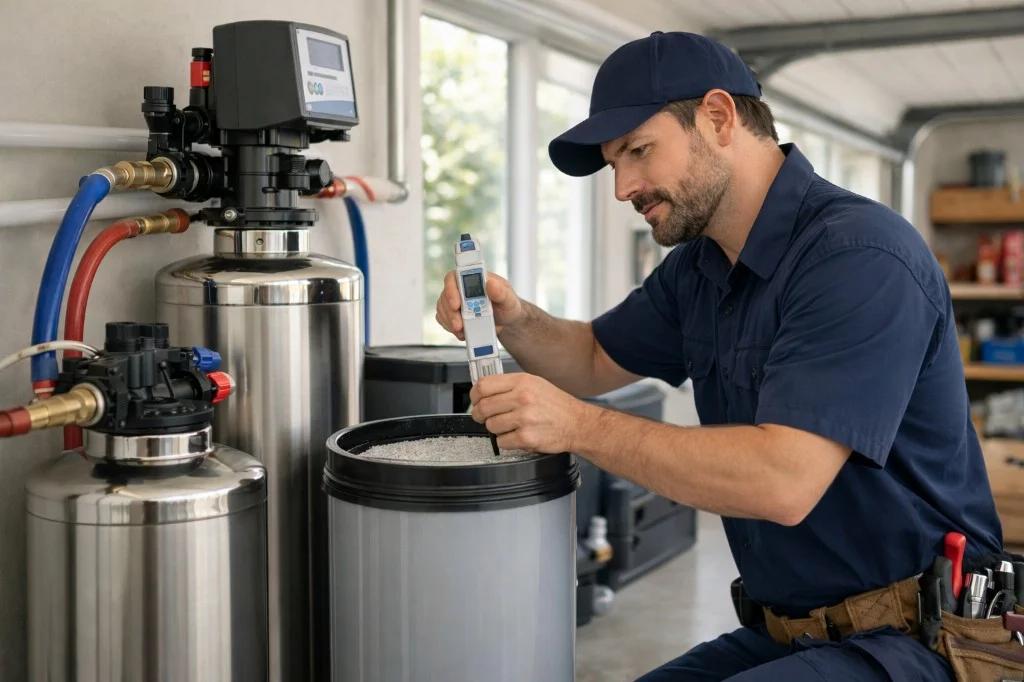
With water quality concerns on the rise and 68% of homeowners now paying closer attention to water hardness and its effects on their home, according to a 2026 Water Quality Association report, it’s worth knowing what to expect from your system in terms of lifespan, and what you can do to make it last as long as possible.
Average Water Softener Lifespan
Most water softeners last 10 to 15 years on average. High-quality systems that are well-maintained can sometimes last 20 years, but that’s the exception, not the rule. Brand, model, water quality, and maintenance frequency are all factors that help determine how long your system will last.
There are two main types: salt-based and salt-free. The most common in use type are Salt-based softeners because they’re straightforward, self-cleaning, and built to keep working the same way for years. Salt-free systems, which condition water rather than remove minerals, tend to have fewer moving parts and may experience less mechanical wear.
That said, comparing the two isn’t always easy because they work differently. What both systems have in common is this: how long they last depends far more on how they’re treated than on what type they are.
Factors That Affect Water Softener Lifespan
Lifespan varies from household to household because no two homes use a water softener the same way. Here are the main factors at play:
- Water hardness level: The harder your water, the harder your system has to work. Homes in high-hardness areas put much more demand on the unit over time. This is especially relevant now, as updated EPA guidelines from early April 2026 recommend keeping hardness below 120 mg/L to prevent scale damage to plumbing and appliances.
- Regeneration cycle frequency: These cycles clean the resin bed so the system can keep doing its job. Too many cycles accelerate wear; too few reduce effectiveness. Getting the frequency dialed in correctly matters.
- Maintenance habits: A system that gets regular attention outlasts one that’s been ignored for years. It’s that simple.
- Salt quality: Low-grade salt leaves residue behind, which can clog the brine tank and damage internal components. Using high-quality salt pellets makes a real difference over the long haul.
- Installation and water pressure: A properly installed system running at the right pressure will always perform better and last longer than one that was rushed into place or working under irregular conditions.
Warning Signs a Water Softener Is Failing
Water softeners rarely quit all at once. They slow down gradually, and the signs often show up around your home before you ever think to check the unit itself.
- Soap and detergents won’t lather: Hard water makes it difficult for soap to do its job. If you’re using more shampoo, hand soap, or dish detergent than usual and still not getting a good lather, your water may not be softening properly.
- Scale buildup: Mineral deposits on faucets, showerheads, and appliances are a classic sign that hard water is slipping through.
- Water feels hard again: Dry skin after showering, stiff laundry fresh out of the dryer, these are everyday signs that the system isn’t doing its job.
- Salt bridges or salt mushing: A hard crust forming above the waterline in the brine tank (salt bridge) or thick sludge at the bottom (salt mushing) can both reduce the system’s efficiency significantly.
- Rising water bills: An inefficient softener can quietly drive up water and energy costs as the system works harder to compensate for declining performance.
- Strange tastes or odors: If your water suddenly has an off taste or smell, it could mean the softener is no longer filtering and conditioning the way it should.
Spotting one of these signs doesn’t necessarily mean the system is done. But if several are showing up at once, especially in an older unit, it’s time to take a closer look.
Maintenance Tips to Extend Water Softener Life
A little routine care goes a long way. Water softeners don’t ask for much, but they do ask for something.
- Check salt levels monthly: Keep the brine tank at least one-third full. Running low forces the system to overwork itself.
- Use high-quality salt pellets: Skip the bargain bags. Better salt means less residue and fewer problems down the line.
- Clean the brine tank once a year: Remove salt bridges by breaking up any crust that’s formed. Clear out sludge from the bottom of the tank.
- Clean the resin bed annually: A resin bed cleaner, used once a year, helps maintain the system’s ability to remove minerals effectively.
- Inspect for leaks regularly: Check hoses and connections a few times a year. Small leaks caught early prevent bigger problems later.
- Schedule professional servicing every one to two years: A trained technician can catch issues that aren’t obvious to the untrained eye and keep the system running efficiently.
One more thing worth noting: newer “smart” water softeners are making maintenance easier by automatically adjusting regeneration cycles based on actual usage patterns. These systems are reducing salt and water waste by up to 40% compared to older models, and sales jumped 15% in early 2026 as more homeowners made the switch.
Repair vs. Replace a Water Softener
This is the question most homeowners eventually face, and the answer usually comes down to a few practical considerations.
If the system is under 10 years old and the repair is minor, fixing it usually makes more financial sense. But if it’s pushing past the 12 to 15-year mark, repairs are becoming more frequent, and performance keeps declining, replacement is likely the smarter long-term investment. Continuing to pour money into an aging system often costs more over time than simply starting fresh with a newer, more efficient unit.
Efficiency matters too. Older softeners tend to use significantly more salt and water than modern systems. Upgrading can reduce ongoing operating costs while delivering better results.
Homeowners may also want to compare replacement timelines across other major home systems before making a final decision. (Internal link to be added.)
FAQs
How long do water softeners usually last?
Most systems last between 10 and 15 years. With proper maintenance and good water conditions, some units reach 20 years.
What causes water softeners to fail early?
Heavy use, very hard water, poor-quality salt, infrequent maintenance, and improper installation are the most common culprits.
Is it worth repairing an older water softener?
It depends on the age and repair cost. A general rule: if the repair costs more than 50% of what a new unit would cost, and the system is already over 10 years old, replacement is usually the better call.
How often should a water softener be serviced?
A basic check every six months works for most homeowners. A professional service every one to two years is ideal for catching issues early.
Do salt-free water softeners last as long as traditional systems?
They often do, and sometimes longer, since they have fewer mechanical components. However, they serve a different purpose than salt-based systems, so the right choice depends on your water quality and household needs.
Conclusion
A water softener is one of those home systems that quietly does a big job every single day. With a typical lifespan of 10 to 15 years, the difference between a system that lasts a decade and one that stretches to 20 years often comes down to consistent, simple maintenance. Know the warning signs, stay on top of the basics, and don’t wait until the problem is obvious to take action. A little attention now saves a lot of trouble later.
Leave a Reply